 |
||
|
||


100 Voices: Full List * Crow/Arikara * Sioux/Cheyenne * American * Rosebud Guided Tours: Crazy Horse at the Little Bighorn * Crazy Horse at the Rosebud Features: Who Killed Custer? * Who Killed Custer? Audio Book Features: Crazy Horse Surrender Ledger * Winter Count of Crazy Horse's Life Features: Bogus Crazy Horse Photos * Unsung 7th Cavalry Scouts Saga Features: Indian Battlefield Tactics * Woman Warriors * Little Bighorn Maps Features: U.S. Medal of Honor Winners * U.S. Atrocities * Indian Atrocities Features: Little Bighorn Mysteries * Virtual Museum |
Bruce Brown's 100 Voices...
Crazy Horse in Action...
Overview
by Bruce Brown
 YOU HAVE BEFORE you a veritable feast of eye-witness information on the Battle Of The Greasy Grass and the Battle Where The Girl Saved Her Brother, both fought in the Great Sioux Nation in the Month Of Ripenning Berries in the Year They Killed Long Hair, or what the Americans call the battles of the Little Bighorn and Rosebud, fought in what the Americans call Montana in June 1876.
Here, for the first time, are the 54 crucial eye-witness contributions to the story of the Little Bighorn -- together with the 40 crucial eye-witness contributions to the story of the Rosebud -- from the standpoint of the great Oglala Sioux war chief Crazy Horse. These eye-witness accounts by survivors are presented in chronological order -- like beads on a string -- as indicated by their numerical sequence and their gray background arrows.
Together they form a narrative of the battle told entirely in the words of Sioux, Cheyenne, Arapaho, Crow, Arikara and American survivors.
Astonisher.com is also pleased to present extensive eye-witness accounts of Crazy Horse's military exploits against the Crow, Shoshone, Arapaho, Ute and others, as well as the largest and most complete collection anywhere of eye-witness accounts of Crazy Horse's appearance, dream visions, women, etc. Enjoy!
September 12, 2008
Updated June 24, 2010; June 5, 2019
This is a FREE EXCERPT from
Bruce Brown's 100 Voices...
Crazy Horse in Action...
Timeline: The Little Bighorn
Sioux, Cheyenne and American...
Eyewitness accounts of Crazy Horse at the Battle of the Little Bighorn
presented in chronological order, beginning just before the battle...
Crazy Horse declined to join the celebration on the night of June 17, 1876 after his great victory at the Battle of the Rosebud because he said he expected another battle with the Americans soon...
|
Crazy Horse welcomed battle with the American invaders...
|
On the morning of June 25, 1876, Sioux scout Fast Horn brought word to Crazy Horse and the other free Sioux and Cheyenne war chiefs that Custer's troops were at the Crow's Nest at dawn, only a few hours ride from the Indians' village on the Little Bighorn River... |
Crazy Horse scrambled a party of Cheyenne decoy/scouts to intercept and engage the American soldiers, if they approached the village...
|
Crazy Horse and Yellow Nose were bathing in the Little Bighorn River "about noon"on June 25, 1876 when they heard shots, announcing Reno's attack and the beginning the battle... |
Crazy Horse couldn't find his horse... |
Crazy Horse seemed uncharacteristically "nervous" after the American attack on the village began, and "rode in a feverish manner to the lodges of the various tribal leaders for brief talks with them..." |
Crazy Horse's warriors became "impatient..." |
Crazy Horse consulted with Soux holy man Long Turd... |
Crazy Horse was again "his cool and wary self..." |
Crazy Horse rode through the village calling, "All who want to fight, follow me..." |
Before joining the battle, Crazy Horse addressed his warriors, "the best fighting element" among the Sioux and Cheyenne forces. Crazy Horse told his men to "restrain their ardor" and obey his commands... |
Crazy Horse told his warriors "he wanted Reno's men to get their guns hot so they wouldn't fire so well..." |
Crazy Horse told his warriors to remember "the lives of our women and children are in danger..." |
Crazy Horse told his warriors: "Do your best and let us kill them all..." |
Crazy Horse told his warriors: "As soon as you are mounted, follow me toward the river..." |
Crazy Horse was late getting into the Reno fight... |
Gall, Rain In The Face and Crow King led the Indians in the early fighting against Reno, halting the American advance and then forcing Reno's men to fall back into the timber along the Little Bighorn River... |
Marcus Reno was standing in the timber confering with his lead scout, Bloody Knife, when Bloody Knife "was shot through the head and his brains scattered over Reno..." |
Moments later, French warned Reno, "the Indians are in our rear..." |
Reno had just retreated into the timber when Black Elk heard the "thunder of the ponies charging" and the cry "Crazy Horse is coming!" |
"Crazy Horse, having collected his warriors, made a dash for the soldiers in the timber and ran into them..." |
Crazy Horse's first charge of the battle "broke Reno's left wing" in the timber... |
"The Dakota attack doubled up the line from the left and pushed this line back toward the soldiers. They all retreated back across the river..." |
Crazy Horse rode among the fleeing soldiers... |
Crazy Horse killed many American soldiers as they ran for their lives... |
Meanwhile, Custer separated from Reno to charge after some Indians along the ridge above the river, possibly Crazy Horse's Cheyenne decoys... |
The Indians fighting Reno saw Custer's troops charge along the ridge and fire down into the village... |
"Word passed among the Indians like a whirlwind" that Custer was riding to attack the other end of the village... |
Disengaging from Reno, Crazy Horse turned to attack Custer, which he predicted would be the "big fight"... |
Meanwhile, Crazy Horse's decoy/scouts led Custer down Medicine Tail Coulee, across the Little Bighorn from the Cheyenne camp... |
Before Crazy Horse could get there, though, Custer charged across the Little Bighorn to attack the village at Medicine Tail Coulee and was shot out of the saddle in the middle of the river by White Cow Bull... |
After Custer was shot at Medicine Tail Coulee, the two sides "for quite a time fought in the bottom" from opposite sides of the Little Bighorn River... |
During this period, before they were under heavy Indian attack, Custer's men fired "two volleys," interpreted by Reno's men as a distress signal and location indicator... |
Northern Cheyenne war chief Contrary Big Belly was one of the leaders when the Indians crossed the Little Bighorn and counter-attacked Custer's troops... |
"Vast numbers of Indians" rushed straight at Custer's now leaderless troops and drove the Americans back up the hill... |
Southern Cheyenne war chief Lame White Man was one of the leaders when the Indian counter-attack drove Custer's men back along Calhoun Ridge, where Lame White Man was killed... |
After Custer's men were driven back from the Little Bighorn River, Crazy Horse led a strong party of Cheyennes across the river to flank the retreating Americans... |
Crazy Horse flanked Custer's retreating troops, repeating the deadly manuever he had used to destroy Reno's line in the timber just a few minutes before... |
Circling around behind Custer's troops, Crazy Horse gave his horse to Flying Hawk while he sniped the Seventh Cavalry soldiers on Calhoun Hill and studied the situation... |
New recruits like young Drags The Rope swelled Crazy Horse's forces... |
Crazy Horse led the charge that split Custer's right flank on Calhoun Hill into "two bunches"... |
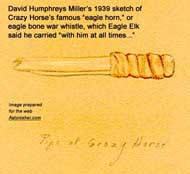
Crazy Horse rode between the split portions of Custer's right flank blowing on his eagle horn... |
Lazy White Bull said he rode ahead of Crazy Horse when Crazy Horse made his famous dash between the split portions of Custer's right flank, but no one else remembered it that way... |
Crazy Horse led a charge that hit a portion of Custer's disintegrating line head on, and then split and "slashed at it from both sides" as the warriors rode the length of the Bluecoats' line... |
Crazy Horse, Ice Bear and Little Horse led the charge that annihilated the last troopers at the crest of Last Stand Hill... |
At the very end of the Custer fight, Crazy Horse rode after, caught, and killed an American trooper who tried to escape on a fast horse... |
Crazy Horse killed 16 American soldiers in the Custer fight, plus 15 in Reno fight, for a total of 31 Americans killed at the Battle of the Little Bighorn... |
As at the Battle of the Rosebud nine days before, Crazy Horse was again commander-in-chief of the free Sioux and Cheyenne military forces when the Indians withdrew on June 26, 1876... |
The Sioux and Cheyenne withdrawal on June 26, 1876 was like "some Biblical exodus; the Israelites moving into Egypt; a mighty tribe on the march..." |
Little Soldier said Crazy Horse was the "greatest warrior" at the battle... |
Waterman said Crazy Horse was "the bravest man" he ever saw... |
Feather Earring said Crazy Horse and Sitting Bull "got good reputation" at the Battle of the Little Bighorn... |
Crow King said Sitting Bull and Crazy Horse were the "great chiefs" of the battle... |
||
| Updated May 21, 2011 | |||
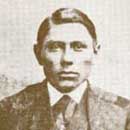
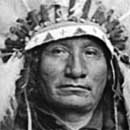
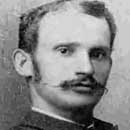
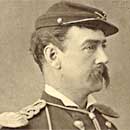
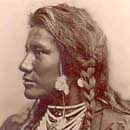
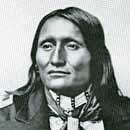
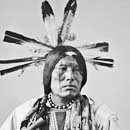
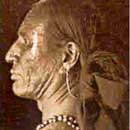
This is a FREE EXCERPT from Sioux, Cheyenne and American... |
|||
  1. Weasel Bear Cheyenne warrior When the free Cheyenne learned in early June 1876 that an American army had invaded their land, and the Americans intended to imprison them on reservations, "Word was sent to Crazy Horse..." |
 2. Gall Sioux war chief Crazy Horse was the Indian commander at the Battle of the Rosebud... |
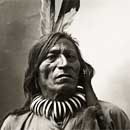  3. Respects Nothing Sioux warrior Crazy Horse was the Indian commander at the Battle of the Rosebud... |
 4. Lazy White Bull Sioux warrior The Sioux / Cheyenne force rode all night to strike Crook on the Rosebud on the morning of June 17, 1876... |
Crazy Horse's plan for a grand trap at the Battle of the Rosebud... |
Shortly after 8 a.m. on June 17, 1876, Crook's men were dismounted and resting, some with saddle girths loosened, when Crazy Horse's first charge of the battle swept down upon them... |
"The Indians came not in a line but in flocks or herds like buffalo, and they piled upon us until I think there must have been one thousand or fifteen hundred in our immediate front..." |
Half of the American soldiers would have been killed in Crazy Horse's first charge, if not for the valor of Crook's Crow and Shoshoni scouts... |
Crazy Horse's first charge, and the Americans' counter-charge... |
Cheyenne woman warrior, Buffalo Calf Road, rescued her brother, Comes In Sight, whose horse was shot out from under him on the first charge... |
"Crazy Horse, Bad Heart Bull, Black Deer, Kicking Bear and Good Weasel rallied the Sioux..." |
"There was now fighting all along the line..." |
"The Sioux and the Cheyenne were extremely bold and fierce..." |
The "wild foemen" and their savage style of fighting... |
"The Indians proved then and there that they were the best cavalry soldiers on earth..." |
Humpy rescued Sgt. Van Moll... |
One Bull rescued Rooster; Lazy White Bull rescued mortally wounded Black Sun... |
John Bourke rescued badly wounded Trumpeter Snow... |
"Young Two Moon thought this was his last day..." but White Shield saved his life... |
Crazy Horse commanded his forces by mirror flash from high ground... |
Crazy Horse and Crook played a game of chase and retreat... |
Wooden Leg recalled: "Sometimes we chased them, sometimes they chased us." |
"The Sioux ponies always outdistanced our grain-fed American horses..." |
Crook divided his command, sending Mills to capture a non-existent Indian village he believed was nearby... |
Crazy Horse nearly captured several American officers, including two on Crook's staff... |
Crazy Horse's warriors shot Crook's horse out from under him...... |
Crook ordered his men to fall back, but before the order could be carried out...... |
Crazy Horse attacked Crook's flank and rear, hitting troops commanded by William B. Royall... |
"The attack was not staged in one mass but relayed in formations, a style of fighting initiated by Crazy Horse and sometimes successful in encircling troops." |
Crazy Horse's warriors cut Crook's over-extended flank to pieces, "charging bodily and rapidly through the soldiers, knocking them from their horses with lances and knives, dismounting and killing them, cutting the arms of several off at the elbows in the midst of the fight and carrying them away..." |
Troops commanded by Guy V. Henry helped save the over-extended American Third Cavalry, but in the process Henry was struck by "a bullet which passed through both cheek bones, broke the bridge of his nose, and destroyed the optic nerve in one eye..." |
Crazy Horse's mauling of Royall forced Crook to recall Mills and the men he had sent to find the Indians' village... |
As Crook consolidated his forces, Crazy Horse withdrew his forces into the Canyon of the Rosebud... |
Grouard warned Crook that Crazy Horse would kill every single American if they tried to follow the Indians into the Canyon of the Rosebud... |
When Crook's Indian scouts flatly refused to follow the Sioux and Cheyenne into the Canyon of the Rosebud, the battle effectively ended... |
"Crook's enemies say he was 'outgeneralled' by Crazy Horse..." |
"We had been most humiliatingly defeated..." |
Crazy Horse showed "good judgement" at the Rosebud |
Crazy Horse "whipped them" at the Rosebud... |
Crazy Horse refused to join the celebration on the night of June 17, 1876 after his great victory at the Battle of the Rosebud because he said he expected another battle with the Americans soon... |
| Updated November 19, 2010 | |||
This is a FREE EXCERPT from Sioux and Cheyenne... |
|||
 Short Bull Sioux warrior Crazy Horse's bravery against the Shoshoni when he saved the life of his younger brother, Little Hawk... |
 Black Elk Sioux holy man Crazy Horse saved the life of his brother, Little Hawk... |
 Crazy Horse Sioux war chief Crazy Horse's own account of saving Little Hawk's life... |
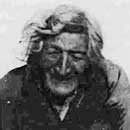 Eagle Elk Sioux warrior Crazy Horse gave his younger brother, Little Hawk, his first coup in a battle against the Utes... |
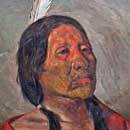 Red Feather Sioux warrior Crazy Horse and the battle called "The Time Hump Was Killed By The Crow" |
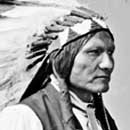 He Dog Sioux war chief Crazy Horse and the battle called "The Time Hump Was Killed By The Crow" |
Short Bull Sioux warrior Crazy Horse and the battle called "The Time Yellow Shirt Was Killed By The Crow" |
He Dog Sioux war chief Crazy Horse at the battle the Sioux called "The Time They Chased The Crow Back To Camp" |
He Dog Sioux war chief Crazy Horse and He Dog 's glory against the Crow |
He Dog Sioux war chief Crazy Horse's bravery against the Arapaho |
|
|
This is a FREE EXCERPT from Sioux, Cheyenne, Arapaho and American... |
|||
He Dog Sioux war chief Crazy Horse always led his men in battle, riding at the front |
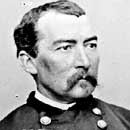 Philip Sheridan American officer Crazy Horse "always leads and he never allows his men to close up on him..." |
Eagle Elk Sioux warrior Crazy Horse "is in front and... if he shoots down an enemy, he does not count coup." |
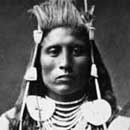 Anonymous Crow Crow warrior "We know Crazy Horse" because "whenever we have a fight, he is closer to us than to you." |
"Crazy Horse was the Napoleon among the Sioux..." |
Crazy Horse liked to have battles planned out |
Crazy Horse "had an organization" of crack troops |
At the Battle of the Rosebud, Crazy Horse controlled the free Indian forces by mirror flash |
On the Powder River, a Socratic Crazy Horse asked his sub-commanders, "how about it?" |
As a battlefield maneuver, Crazy Horse apparently trained his pony to rear and dance wildly, somewhat like levade in European dressage... |
On the Powder River, Crazy Horse said, "These soldiers like to shoot. I am going to give them a chance to do all the shooting they want to do..." |
At the Little Bighorn, Crazy Horse ordered his men to let the Americans "get their guns hot so they would not work so well..." |
At the Battle of the Rosebud, Crazy Horse's attack "was not staged in one mass but relayed in formations, a style of fighting initiated by Crazy Horse and sometimes successful in encircling troops." |
At the Battle of the Little Bighorn, Crazy Horse led the charge that smashed Reno's defensive line in the timber... |
At the Battle of the Little Bighorn, Crazy Horse led the charge that split Custer's right flank on Calhoun Hill into "two bunches"... |
At the Little Bighorn, Crazy Horse rode between the split portions of Custer's right flank blowing on his eagle horn... |
At the Little Bighorn, Crazy Horse led a charge that hit a portion of Custer's disintegrating line head on, and then split and "slashed at it from both sides" as the warriors rode the length of the Bluecoats' line... |
At the Little Bighorn, Crazy Horse, Ice Bear and Little Horse led the charge that annihilated the last troopers at the crest of Last Stand Hill... |
At the very end at the Little Bighorn, Crazy Horse rode after, caught, and killed an American trooper who tried to escape on a fast horse... |
Waterman said Crazy Horse was "the bravest man" he ever saw... |
"Crazy Horse was the bravest man he ever met..." |
Crazy Horse frequently dismounted to shoot for maximum accuracy |
Crazy Horse "always stuck close to his rifle" |
|
This is a FREE EXCERPT from Sioux and American... |
|||
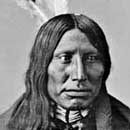 Little Killer Sioux warrior Crazy Horse had "brown hair like a white man's and a long straight nose..." |
Short Bull Sioux warrior Crazy Horse had "black eyes that hardly ever looked straight at a man, but they didn't miss much that was going on, all the same..." |
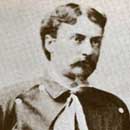 New York Sun Reporter American journalist Crazy Horse's "eyes are exceedingly restless and impress the beholder fully as much as does his general demeanor...." |
Black Elk Sioux holy man Crazy Horse's "eyes looked through things and he always seemed to be thinking hard about something..." |
Crazy Horse was "a very handsome young man..." |
Crazy Horse would joke around in his own tepee, "but around the village he hardly ever noticed anybody, except little children..." |
Crazy Horse was "a quiet fellow..." |
"Crazy Horse was quiet and not inclined to associate with others..." |
Crazy Horse "never was excited..." |
Crazy Horse was shot point blank in the face "just below the left nostril," scarring him for life |
Crazy Horse was "shot through the head below the eye..." |
Crazy Horse had gun "powder marks on one side of his face..." |
Crazy Horse had a scar from "a bullet wound through his left cheek..." |
Crazy Horse "had quite a scar on his left cheek..." |
Crazy Horse had a scar on the right side of his face... |
Crazy Horse was "lithe and sinewy and with a scar in the face. The expression of his countenance was one of quiet dignity..." |
Crazy Horse "had white spots painted here and there on his face for protection in battle..." |
Crazy Horse painted red lightning on his face for war... |
Crazy Horse "never wore a war bonnet..." |
Crazy Horse "never wore a war bonnet..." |
Crazy Horse "never wore a war bonnet..." |
Crazy Horse had his "eagle horn" -- his sacred eagle bone war whistle -- "with him at all times..." |
Crazy Horse "wore the long white 'stole' over his shoulders as insignia, and also to tie himself to his planted lance in a fight to the death." |
Crazy Horse"usually wore a Iroquois shell necklace..." |
Crazy Horse's "scalp lock was ornamented with beads and hung clear to his waist; his braids were wrapped in fur...." |
Crazy Horse liked to wear a red blanket he took from a frieght shipment his men intercepted in 1867 after the Fort Kearny fight... |
Crazy Horse "appeared much younger than his age..." |
Crazy Horse rode a pinto at the Little Bighorn |
Crazy Horse "never wanted to have many things for himself, and did not have many ponies like a chief..." |
Crazy Horse said, "take this message -- I shall go slowly" to any meeting with Americans hungry for for more Lakota land |
"Crazy Horse... was a good man, and I would trust him anywhere..." |
"Crazy Horse was as fine an Indian as he ever knew..." |
| Updated April 13, 2011 | |||
This is a FREE EXCERPT from Supposed photos of Crazy Horse... |
|||
Crazy Horse "never had his picture taken...He was very peculiar about this..." |
Crazy Horse "never had his photo taken..." |
"I tried hard to have one taken of him in 1877," but Crazy Horse woudn't allow it... |
Short Bull said he had seen three photos of Crazy Horse, all showing him on horseback... |
This is a FREE EXCERPT from Sioux and American... |
|||
Little Killer Sioux warrior Crazy Horse's women |
He Dog Sioux war chief Crazy Horse's women |
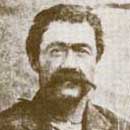 Baptiste Pourier American frontiersman Crazy Horse's women |
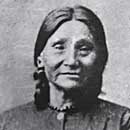 Susan Bordeaux Bettelyoun American daughter of trader James Bordeaux Crazy Horse's women |
This is a FREE EXCERPT from Sioux and American... |
|||
Crazy Horse dreamed "I was sitting on a hill or rise, and something touched me on the head..." |
Crazy Horse "dreamed and went into the world where there is nothing but the spirits of all things..." |
Crazy Horse dreamed "a man on horseback came out of the lake..." |
Crazy Horse dreamed he saw "a mighty eagle soaring far above him..." |
Crazy Horse's Great Vision... |
|||
This is a FREE EXCERPT from Sioux and Cheyenne... |
|||
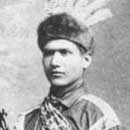 Dr. Charles Eastman Sioux chronicler Crazy Horse, Little Hawk and the grizzly bear... |
Short Bull Sioux warrior Crazy Horse's bravery against the Shoshoni when he saved the life of his younger brother, Little Hawk... |
Crazy Horse Sioux war chief Crazy Horse's own account of saving Little Hawk's life... |
Eagle Elk Sioux warrior Crazy Horse gave his younger brother, Little Hawk, his first coup in a battle against the Utes... |
Eagle Elk Sioux warrior Crazy Horse killed a horse over the grave of his brother, Little Hawk... |
Updated June 13, 2010 | ||
 |
 |
 |
 |
© Copyright 1973 - 2020 by Bruce Brown and BF Communications Inc. Astonisher, Astonisher.com, Conversations With Crazy Horse, 100 Voices, Who Killed Custer?, The Winter Count of Crazy Horse's Life, and Mysteries of the Little Bighorn are trademarks of BF Communications Inc. BF Communications Inc. Website by Running Dog |

More Crazy Horse * The Winter Count of Crazy Horse's Life: circa 1840 - 1877 * The Complete Crazy Horse Surrender Ledger: May 6, 1877 * The Chicago Times story: May 7, 1877 * The May 27, 1877 New York Sun story * Bogus Crazy Horse Photos: Crazy Horse and Black Shawl Woman (Not) * Sioux and Cheyenne battlefield tactics during the American wars of imperial conquest on the High Plains
|