 |
||
 
|
||
|
|||||||
General Journalism by Bruce Brown |
|||||||
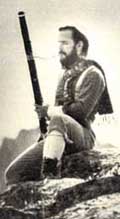 |
Filming 'Never Cry Wolf'Derided as "Never Cry Wrap" by critics inside Walt Disney during its seeemingly interminable gestation, Carroll Ballard and John Houston's film of Farley Mowat's autobiographical classic, Never Cry Wolf, turned into a classic of its own sort. This story by Bruce Brown about how the film was made originally appeared in the October 16, 1983 issue of the New York Times Magazine. Left -- Charles Martin Smith as Farley Mowat in Carroll Ballard's film of "Never Cry Wolf." |
||||||
|
Baseball in CubaBaseballs ricochet off everything in sight in "Baseball in Cuba" by Bruce Brown. Originally published in the July 1984 issue of the Atlantic Monthly, it remains the best history of Cuban baseball available in English. Left -- Fidel Castro pitches for Los Barbudos in Havana on July 24, 1959. |
||||||
|
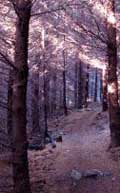
Lost in the WoodsBruce Brown and his ex-wife, Lane Morgan, lose their way on the dangerously metaphoric terrain of Kloochman Rock in the Olympic Peninsula rain forest. Originally published in the New York Times Magazine in August 1985, this story was later anthologized in Island of Rivers. Left -- "as the afternoon shadows began to lengthen, we entered a deep dell..." |
||||||
|
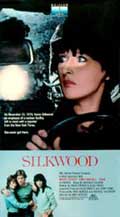
Silkwood Finale: The Fuel Rods Are OKThe Karen Silkwood nuclear fuel safety controvery takes an unexpected turn at the end, which you won't find in the movie. This investigative piece by Bruce Brown originally appeared in the December 7, 1985 New York Times. Left -- Meryl Streep in her Oscar-nominated portrayal of Karen Silkwood. |
||||||
 |
Gone Fish Watching
|
||||||
 |
The Gary Little StoryHow a very clever and well-connected man was able to continue raping children who came into his charge for decades -- both as a teacher and as a judge -- is examined by Bruce Brown, who as a high school student was co-editor of the Lakeside Tatler when Gary Little taught at Seattle's prestigeous Lakeside School. Left -- "The Gary Little story runs like a radioactive tracer through the Seattle power structure, exposing the old-boy network that connects many of the best law firms, local government, the old media families, and local barons of industry and retailing." |
||||||
 |
North Fork Skagit River ReverieBruce Brown tours legendary Northwest literary ground -- or water -- via kayak in this visit to LaConner and Fishtown, the bohemian writers' community at the mouth of the North Fork Skagit River. This story originally appeared in the July 1988 issue of State magazine. Left -- "Here time runs on the tides, the seasons and the salmon. A friend is someone who will bail your boat when you are stuck in town, and a funny stanza on 'The Parable of the Three Sages Tasting Vinegar' is worth more than a Volvo." |
||||||
 |
Mutual Bond Fund FunBruce Brown delves into the mysteries of mutual bond fund performance metrics in this piece from the September 1994 issue of Kiplinger's Magazine. Left -- "The oft-quoted 'SEC 30-day yield' may do a lot of things, but telling you the actual yield of a bond fund isn't one of them." |
||||||
 |
Crashing the Party:
|
||||||
 |
BugNetFrom late 1994 through late 1999, Bruce Brown wrote more than 100 influencial and widely read pieces for BugNet, which he founded and built into the world's leading supplier of PC bug fixes. Left -- "The World's Leading Supplier of PC Bug Fixes." |
||||||
 |
Why America Drinks Bad Bottled WaterThe best selling brands of bottled water in America are also among the worst tasting and least local. Here's why! Left -- "Choice is an illusion perpetrated by those with power upon the powerless," spake the Mergovinian in The Matrix Reloaded. |
||||||
 |
Sumas AstonisherControversial and quixotic, the Sumas Astonisher was founded by Bruce Brown as a "Flood Lost and Found List" to catalogue flotsam found around the little border town of Sumas, WA, after an exceptionally bad flood in late 1990. Left -- "Sumas Quo Sumas" |
||||||
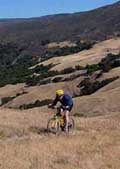 |
At Play In Harm's WayThe private heart of one of the new extreme sports -- mountain biking -- is examined in this 2002 essay by Bruce Brown, who holds the world record for climbing on a mountain bike. Left -- "This morning we are like a Paleolithic band on the hunt. We vie for the lead, but we also share it, and for the good riders there is plenty of game to go around." |
||||||
|
|
|||||||
 |
Homage to SmokeyTHERE ARE MANY dogs in the world, but as with people, only a few good ones. This is about a very good dog named Smokey, who died on January 29, 2006. Left -- "I buried Smokey under the two big old filbert trees on the edge of the north pasture because she loved walking there, and considered all the field mice there to be her personal posession." |
||||||
Environmental Journalism by Bruce Brown |
|||||||
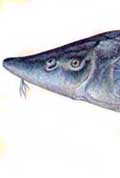 |
Heart Stopping SturgeonThis true fish story by Bruce Brown originally appeared in the June 1984 issue of Field & Stream. Left -- "Within the last year, the single greatest spur to West Coast sturgeon fishing has undoubtedly been the 9-foot-long, 468-pound white sturgeon caught by 21-year-old Joe Pallotta in the Sacramento River July 12." |
||||||
 |
Shedding Light on the AuroraBruce Brown explores the literature and science of the aurora in a piece that appeared (in somewhat different forms) in the New York Times Magazine and the March 1985 issue of National Wildlife. Remember: when the big one hits, you heard it here first. Left -- The auroral "ring of fire" over North America, as seen from space... |
||||||
|
|
|||||||
 |
Wildlife Tracking By TransmitterBruce Brown encounters David Beaty, the father of wildlife radio telemetry, in Seattle in 1984. This piece originally appeared in National Wildlife, and then was published again in the form you see here in the May 9, 1984 Seattle Weekly. Left -- "It's 11 o'clock at night. Do you know where your wombat is?" |
||||||
Literary Journalism by Bruce Brown |
|||||||
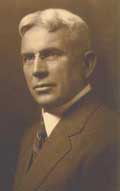 |
Vernon Louis Parrington --
|
||||||
 |
Resdiscovering Opal Whiteley's
|
||||||
 |
Desert DispatchesBruce Brown praises Edward Abbey's Beyond the Wall and gets hate mail from the irrasible Abbey in return! This review originally appeared in the April 1, 1984 Washington Post Book World. Left -- "The heart of Abbey Country is somewhere in a canyon along the Colorado River or a tributary like the Green or Paria rivers, although for literary purposes he lists his address as Oracle, Arizona." |
||||||
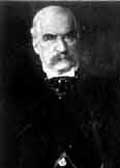 |
The Empire that Morgans BuiltRon Chernow's sprawling, National Book Award-winnning portrait of America's pre-eminent merchant banking empire, The House of Morgan, is reviewed by Bruce Brown. This piece originally ran in the March 18, 1990 Washington Post Book World. Left -- "I owe the public nothing..." |
||||||
 |
The New Literature of the WestBruce Brown reviews Lawrence Thornton's Ghost Woman. This piece originally appeared in the June 1992 issue of Washington Post Book World. Left -- "A new kind of coastal western in which no doggies are punched, nary a sidewinder slaps leather, and discouraging words most definately are heard..." |
||||||
 |
Writing in the Rain
|
||||||
Map Journalism by Bruce Brown |
|||||||
 |
Brave New World of News MappingMaps have always been uniquely powerful means of revealing relationships in a story, but they have tradtionally functioned in a supporting, illustrative role. In today's online publications, however, interactive maps have become the way to tell the story like never before. Left -- Google developed much of the underlying technology that enables modern online mapping -- called AJAX, an acronym for asynchronous JavaScript + XML -- shortly after the turn of the century, and first implemented in it Google Maps in 2005. |
||||||
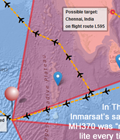 |
Malaysia Airlines Flight MH370 MysteryFollowing its sudden and mysterious disappearance on the night of March 8, 2014 during a regularly scheduled flight from Kuala Lumpar, Malaysia to Beijing, China, with 224 passengers and 12 crew mwmbers aboard, Malaysia Airlines Flight MH370 became the focus of the largest and most expensive search ever conducted for a missing airplane. The offical search proved fruitless, but wreckage believed to be from the missing plane was found off Madagascar two years later. This interactive javascript map, created by Bruce Brown, allows you to trace the entire story -- as well as the many theories about what happened to MH370 -- across across nearly 10,000 miles of the earth surface. Left -- "A fragment of plane wing discovered in Mauritius in May has been confirmed as coming from missing plane Malaysia Airlines MH370, Australia's Transport Safety Bureau (ATSB) said in a statement on Friday." |
||||||
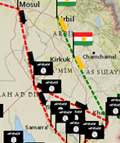 |
ISIS and the War of the CaliphateIn early 2014 the radical Islamic group known variously as Islamic State of Iraq and the Levant, ISIL, ISIS, Daish and Dahesh drove out of Syria and overran nearly one third of neighboring Iraq in a blitzkreig war that startled much of the world. There is no entry for the War of the Caliphate in Wikipedia, and most of the Western World would prefer to forget the whole episode, but this interactive javascript map by Bruce Brown allows you to follow ISIS's rise across thousands of miles of terrain and brings back the desparate flavor of the time. Left -- BATTLE OF DHULUIYA, 2014 |
||||||


|
© Copyright 1973 - 2020 by Bruce Brown and BF Communications Inc. Astonisher and Astonisher.com are trademarks of BF Communications Inc. BF Communications Inc. Website by Running Dog |
